
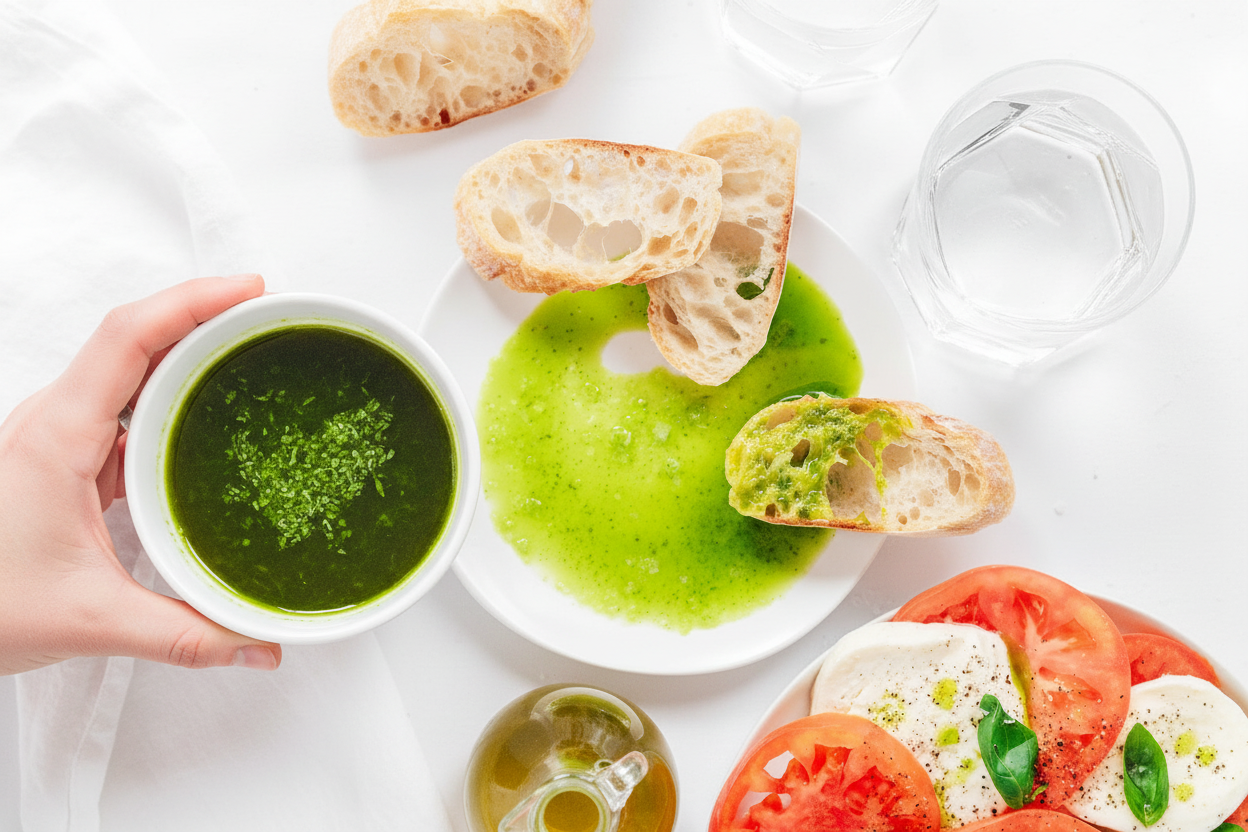
The Day I Fell in Love With Basil Oil
I still laugh at the first time I made basil oil. I burned it. The whole kitchen smelled like bitter grass. My husband walked in and said, “Are you cooking weeds?” We had a good laugh.
But I didn’t give up. The second time, I got it right. That bright green color made me feel like a real chef. Trust me, if I can do it, you can too.
Why Basil Oil Matters in Your Kitchen
A drizzle of this oil changes everything. You can put it on eggs, toast, pasta, or even popcorn. It’s like little drops of summer in a bottle.
Here is why this matters: you control what goes in it. Store-bought dressings have hidden sugars and chemicals. This one is just basil and oil. Your body thanks you for that.
Another reason: you save money. One bunch of basil makes more oil than you think. Have you ever tried making your own dressings at home?
The Trick That Saves the Green
My secret is the ice bath. Don’t skip it. When you blanch the basil for fifteen seconds, it gets bright and soft. Then you dunk it in cold water to stop the cooking.
This keeps the color brilliant green. I learned this from an old Italian lady at the farmer’s market. She said, “Cold water is the boss of hot water.” I never forgot that.
Doesn’t that smell amazing when you open the blender? It knocks me over every time. What is your favorite herb to cook with?
A Little Story About My Garden
Every summer, I plant too much basil. I can’t help it. The leaves smell so good when you brush against them. My grandkids pick leaves and eat them right off the plant.
One year, I had so much basil I made ten jars of this oil. I gave them as gifts for Christmas. Every friend asked for the recipe. That felt good.
Basil teaches us that simple things are often the best. We don’t need fancy ingredients to eat well. Do you grow any herbs at home? I’d love to hear what you plant.
The Science Part (Made Simple)
Here is a *fun fact* call-out: Blanching the basil kills the enzymes that turn brown. That’s why your oil stays bright green for weeks. It’s not magic, just clever cooking.
You also get healthy fats from the olive oil. Each tablespoon has twelve grams of good fat. Your brain needs that fat to work right. So this oil is tasty and smart.
Why this matters: you get vitamins from the basil too. Even strained, the oil picks up some of the plant’s goodness. It’s a win-win for your meals.
How to Use Your Basil Oil Every Day
Drizzle it over sliced tomatoes with salt. Put it on grilled chicken or fish. Mix it into plain yogurt for a quick dip. My grandson pours it on his mac and cheese. Don’t laugh, it’s good.
Store your oil in a clean glass jar. Keep it in the fridge. It stays fresh for about two weeks. Shake it before using, because the color settles at the bottom.
Now I want to ask you: what is one dish you would put this oil on? Write to me and tell your story. I read every single one.
Your Turn to Try
The recipe is simple. Two cups of fresh basil. One cup of good olive oil. That is all. Boil water, blanch the leaves, ice them, blend them, strain them. Fifteen minutes from start to finish.
I promise you will feel proud when you see that bright green oil. Pour it in a pretty bottle and give some away. It makes people feel special.
Here is one last question: have you ever made something so pretty you didn’t want to eat it? That is how I feel every time. Enjoy your basil oil, friend.
Ingredients:
| Ingredient | Amount | Notes |
|---|---|---|
| Fresh basil | 2 cups (30 g) | Packed fresh leaves |
| Extra virgin olive oil | 1 cup (236 mL) | High-quality oil recommended |
Why I Love Making Basil Oil at Home
I still remember the first time I made basil oil. My kitchen smelled like a fancy restaurant. Doesn’t that sound amazing? It only takes 15 minutes, and you probably already have the ingredients. You just need fresh basil and good olive oil. That’s it. I love how this oil makes plain pasta taste special. It also makes a great gift. Just pour it into a pretty bottle and tie a ribbon. (Hard-learned tip: Don’t skip the ice bath or your basil will turn dark and sad.)
Step 1: First, fill a bowl with ice and cold water. Set it aside. This helps lock in that pretty green color. Always have your ice bath ready before you start boiling water.
Step 2: Bring a small pot of water to a rolling boil. Put your 2 cups of fresh basil leaves in a colander. Dunk the whole colander into the boiling water. Use a spoon to push every leaf under. Let them swim for exactly 15 seconds. You will see the leaves turn bright green and get soft. This is called blanching.
Step 3: Lift the colander out and quickly dump the basil into your ice bath. This stops the cooking right away. Swish the leaves around with your hand. The water will turn a little warm, and that is okay. Let them sit in the cold for a minute.
Step 4: Grab the basil out of the water and squeeze it gently. Pat it dry with a clean kitchen towel or paper towels. You want the leaves dry, not dripping. Toss them into a blender. Pour in 1 cup of extra virgin olive oil. (I use good oil because you can taste the difference. Trust me on this.) Blend until the mixture looks smooth and green, like a liquid emerald.
Step 5: Set a fine mesh sieve over a bowl or a clean jar. Pour the green mixture through the sieve. Use the back of a spoon to push the liquid through. You will be left with a tiny pile of dry basil solids. Throw those away or save them for soup. What remains is pure, smooth basil oil. Pop quiz: What happens if you skip the ice bath? Share below!
Cook Time: 15 minutes
Total Time: 15 minutes (plus cooling time)
Yield: About 1 cup (16 tablespoons)
Category: Sauce, Condiment
Three Fun Twists on Basil Oil
Sparkling Lemon Twist: Add the zest of one lemon to the blender with the basil. The oil turns bright and zesty. It is wonderful on fish or roasted chicken.
Spicy Kick: Toss in half a small dried chili pepper before blending. You get a gentle warmth that wakes up your tongue. Perfect for drizzling over pizza.
Garlic Lover’s Dream: Add one small clove of garlic to the blender. The flavor is bold and cozy. Just be careful—garlic gets stronger the longer it sits. Which one would you try first? Comment below!
How to Serve This Green Goodness
Drizzle this oil over warm bread for a quick snack. It also makes plain steamed veggies taste like a treat. I love to spoon it over scrambled eggs on lazy Sunday mornings. A little goes a long way.
For dinner, try pairing it with a glass of lemonade or iced tea. If you want something grown-up, it matches nicely with a dry white wine. The basil flavor is summery and bright. Which would you choose tonight?
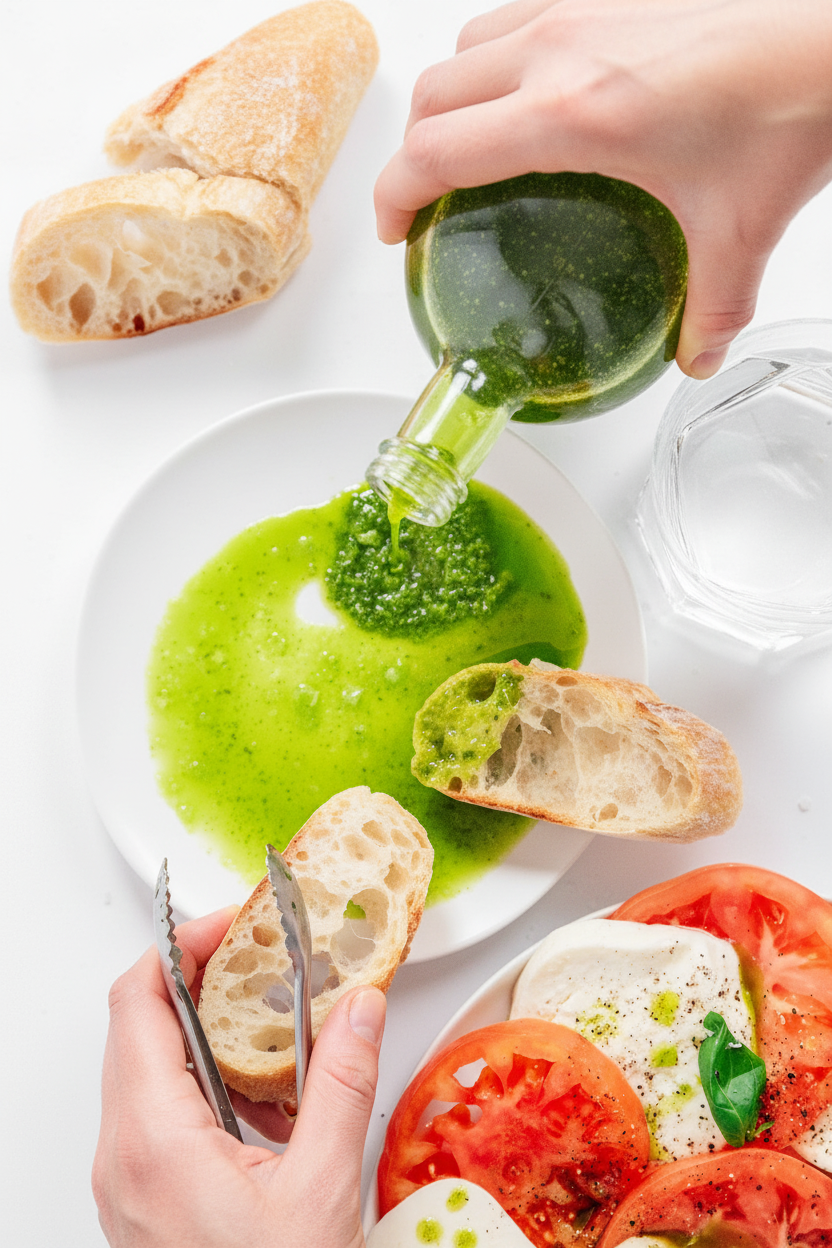
How to Store Your Basil Oil and Why It Matters
This basil oil is best used fresh, but you can store leftovers. Pour it into a clean glass jar and keep it in the fridge for up to one week. The cold slows down spoilage and keeps the bright green color pretty.
I once made a big batch for a summer pasta party. I stored the extra in a jar and forgot about it for almost ten days. It had turned a sad, dull brown. That is why I now only make what I will use in a week.
You can also freeze basil oil. Pour it into an ice cube tray. Once frozen, pop the cubes into a freezer bag. Each cube is about one tablespoon. Just thaw what you need for a quick drizzle over roasted veggies or bread. Batch cooking like this saves you time on busy nights. Have you ever tried storing it this way? Share below!
Three Common Problems and Easy Fixes
First, your oil tastes bitter. This happens if you blend the basil too long. The heat from the blender blade can ruin the flavor. Just blend until it is smooth and stop. A few short pulses work better than one long run.
Second, the oil looks cloudy or separated. Do not worry. That is normal. Just give the jar a gentle shake before you use it. I remember the first time I saw that happen. I thought I did something wrong. Now I know it just needs a little stir.
Third, you have trouble straining out all the bits. A fine mesh sieve works best, but be patient. Let it drip for a few minutes. Press gently with a spoon, but do not push too hard or you will get sludge. Fixing these small problems makes you a more confident cook. It also means your dishes will taste bright and fresh every time. Which of these problems have you run into before?
Your Quick Questions Answered
Q: Is this basil oil gluten-free?
A: Yes. It is made from fresh herbs and olive oil. No gluten at all.
Q: Can I make it ahead of time?
A: Yes. Make it up to three days before you need it. Keep it in the fridge.
Q: What if I do not have basil?
A: Try parsley or cilantro instead. The method stays the same.
Q: Can I double the recipe?
A: Yes. Just use twice the basil and oil. Blend in two batches if your blender is small.
Q: Any extra tips?
A: Add a pinch of salt to the blender. It helps bring out the herb flavor. Which tip will you try first?
A Final Note from Emma Caldwell
Making your own basil oil is a small act of love. It turns a simple meal into something special. I hope you try this recipe and make it your own.
*Fun fact: Basil was once believed to bring good luck in some cultures. I love thinking of that every time I drizzle this oil over dinner. Now it is your turn. Have you tried this recipe? Tag us on Pinterest!
Happy cooking!
—Emma Caldwell.
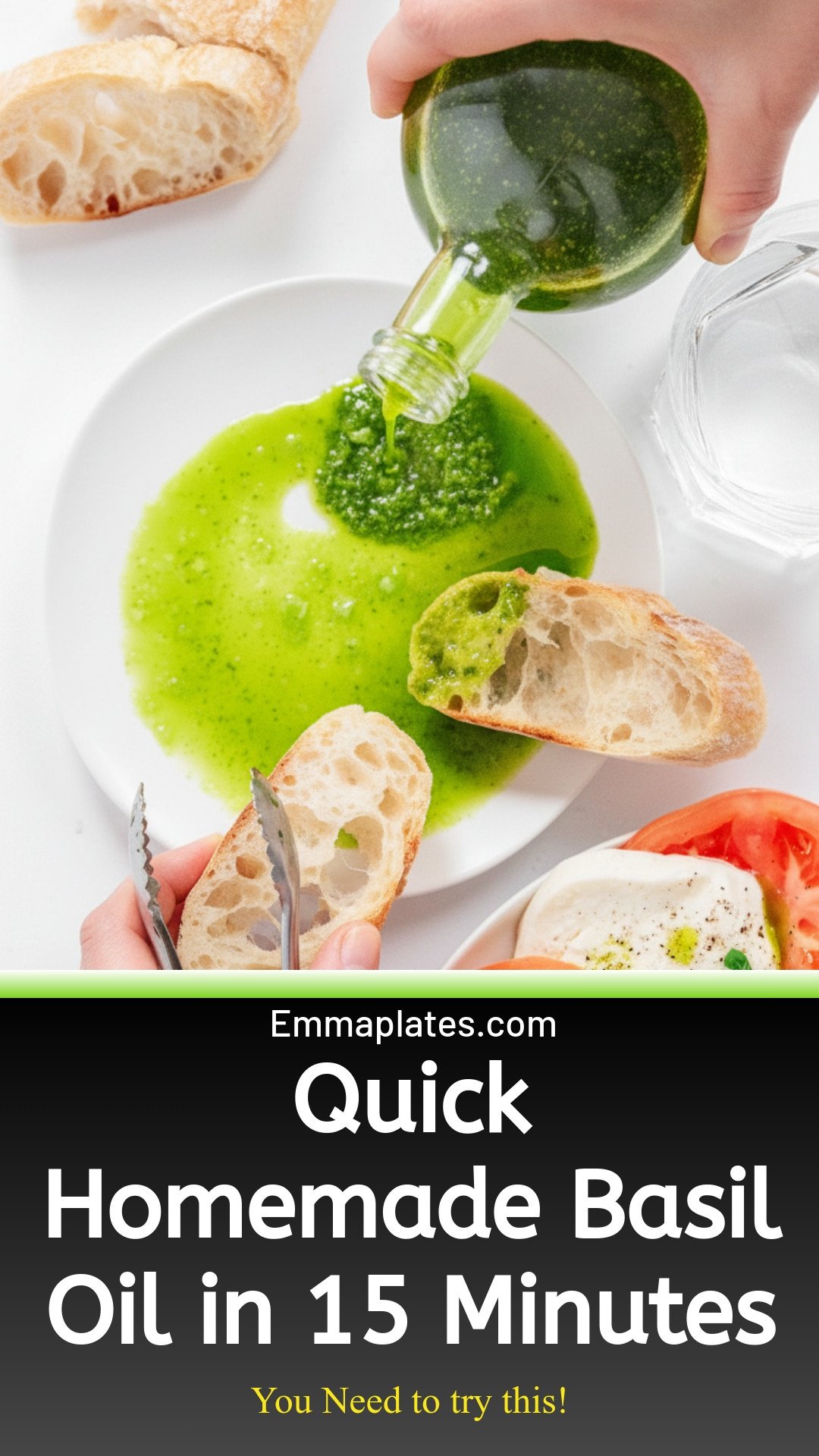
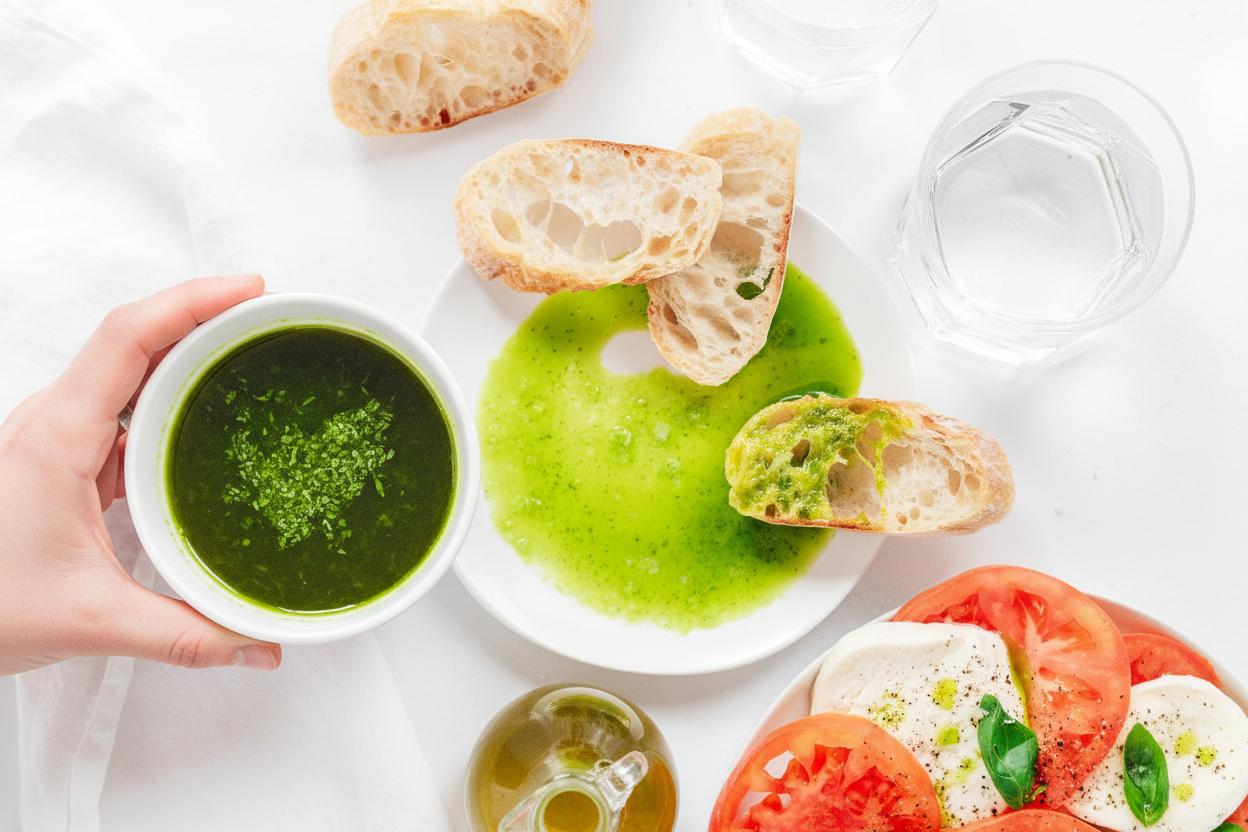
Homemade Basil Oil (In 15 Minutes): Quick Homemade Basil Oil in 15 Minutes
Description
Learn how to make vibrant Homemade Basil Oil in just 15 minutes. Perfect for pasta, salads, and dipping. Quick, fresh, and so easy.
Ingredients
Instructions
- Prepare a bowl of ice water.
- Bring a pot of water to a boil. Place basil leaves in a colander, then dunk the colander into the boiling water, using a spoon to ensure all basil leaves go under the water. Blanch for about 15 seconds, or until bright green and wilted.
- Immediately transfer basil leaves to the ice water to stop the cooking process.
- Strain basil from water, patting dry. Add to a blender along with oil, blending until smooth.
- Strain the pureed mixture through a fine mesh sieve to remove the basil solids, leaving you with a smooth basil oil!
Notes
- Nutrition per serving (1 Tbsp): Calories: 109 kcal | Carbohydrates: 0.1 g | Protein: 0.1 g | Fat: 12.6 g | Saturated Fat: 1.8 g | Cholesterol: 0 mg | Sodium: 0 mg | Potassium: 9 mg | Fiber: 0.1 g | Sugar: 0 g | Calcium: 5 mg

Leave a Reply